Spicy Moroccan Fish-Flavorful Rich Sauce Recipe
Classic Spicy Moroccan Fish in Rich Sauce is more than just a meal; it’s an aromatic journey that transports your senses straight to the bustling souks of Marrakech. Imagin extracte the vibrant colors, the non-intoxicating blend of spices, and the warmth of North African hospitality – this dish encapsulates it all. People adore this recipe for its incredible depth of flavor, the way tender, flaky fish is enveloped in a velvety, complex sauce that dances on your palate. What truly makes this Classic Spicy Moroccan Fish in Rich Sauce so special is the harmonious marriage of heat from chili, sweetness from tomatoes, and the fragrant earthiness of cumin and coriander, all brought together with a hint of preserved lemon for that quintessential Moroccan tang. It’s a dish that feels both comforting and exotic, elegant enough for a dinner party yet simple enough to become a weeknight favorite.
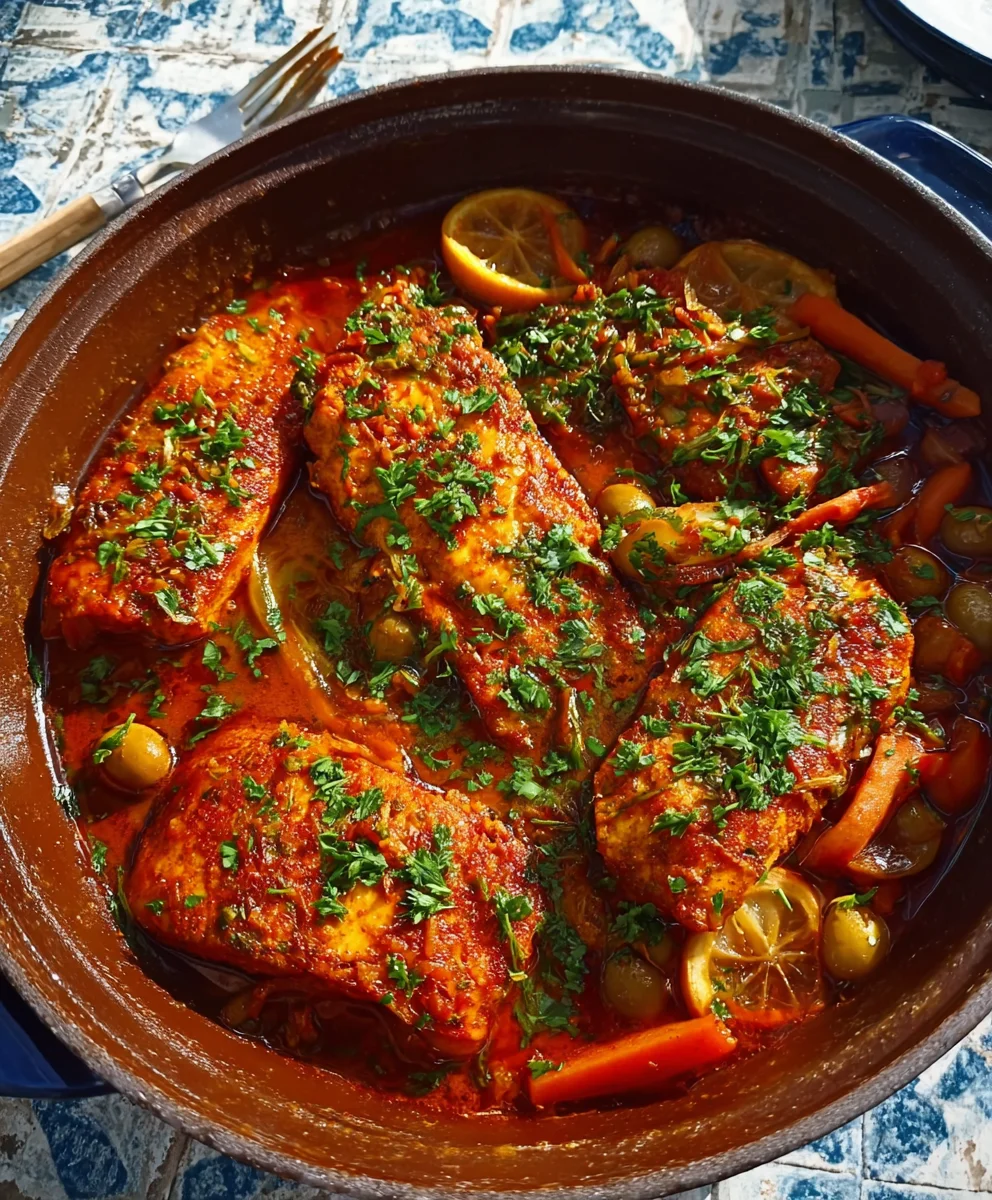
Ingredients:
- 1 pound (450g) salmon fillets, skin removed and cut into 2-inch chunks (feel free to substitute with cod, halibut, or sea bass)
- ⅓ cup extra virgin extract olive oil
- 1 red bell pepper, seeded and sliced into ¼-inch thick strips
- 1 serrano pepper, seeded and thinly sliced (for a milder heat, use 2 jalapeno peppers instead)
- ½ cup fresh cilantro, roughly chopped, divided
- 2 medium carrots, peeled and cut into ¼-inch thick matchsticks
- 1 large russet potato, peeled and cut into 1-inch cubes (this is optional, but adds a delightful heartiness)
- 6 large garlic cloves, peeled and halved
- 1 tablespoon tomato paste
- ¾ to 1 cup filtered water (start with ¾ cup and add more if needed for desired sauce consistency)
- 1 tablespoon sweet paprika
- ½ tablespoon hot paprika (adjust this to your personal spice preference; add more for extra heat or less if you’re sensitive)
- 1 teaspoon coarse sea salt
- ½ teaspoon ground cumin
- ¼ teaspoon ground turmeric
Preparing the Fish and Vegetables
Step 1: Mise en Place and Searing the Salmongin extract4>
Begin by preparing all your ingredients. Cut the salmon fillets into generous 2-inch chunks, ensuring they are bite-sized and easy to manage within the sauce. Pat them dry with paper towels; this step is crucial for achieving a good sear. Season the salmon pieces lightly with a pinch of salt and pepper. In a large, heavy-bottomed skillet or a Dutch oven, heat 2 tablespoons of the olive oil over medium-high heat until it shimmers. Carefully add the salmon pieces in a single layer, being careful not to overcrowd the pan. Sear the salmon for about 1-2 minutes per side, just until a light golden crust forms. The fish should not be cooked through at this stage, as it will finish cooking in the sauce. Remove the seared salmon from the skillet and set it aside on a plate.
Step 2: Building the Flavor Base with Aromatics and Vegetables
To the same skillet, add the remaining ⅓ cup of olive oil. Reduce the heat to medium and add the sliced red bell pepper, sliced serrano pepper (or jalapenos), and the carrot matchsticks. Sauté these vegetables for about 5-7 minutes, stirring occasionallgin extractuntil they begin to soften slightly. You want them tender-crisp, not mushy. Add the halved garlic cloves and the optional potato cubes to the skillet. Continue to cook for another 3-4 minutes, stirring frequently, until the garlic is fragrant and the potatoes are starting to get a slight color. Stir in the tomato paste and cook for 1 minute more, stirring constantly, until it deepens in color and becomes fragrant; this intensifies its flavor.
Creating the Rich Moroccan Sauce
Step 3: Blooming the Spices and Adding Liquid
Now it’s time to introduce the vibrant spices that define this dish. Sprinkle the sweet paprika, hot paprika, coarse sea salt, cumin, and turmeric over the sautéed vegetables. Stir everything together well and cook for about 1 minute, allowing the spices to bloom in the hot oil. This process releases their full aroma and flavor. Pour in ¾ cup of water and bring the mixture to a simmer, scraping up any browned bits from the bottom of the skillet – this is where a lot of the flavor is! If the sauce seems too thick, you can add the remaining ¼ cup of water, a little at a time, until you reach your desired consistency. The sauce should be rich and flavourful, enough to coat the vegetables and fish.
Step 4: Simmering and Infusing Flavors
Once the sauce is simmering and has reached the desired consistency, nestle the seared salmon chunks back into the skillet amongst the vegetables. Spoon some of the sauce over the fish to help it cook evenly. Reduce the heat to low, cover the skillet tightly with a lid, and let it simmer gently for 8-10 minutes, or until the salmon is cooked through and flakes easily with a fork. The cooking time will depend on the thickness of your salmon pieces. During this time, the flavors will meld together beautifully, creating a deeply aromatic and spicy sauce that perfectly complements the tender fish. If you included the potatoes, ensure they are fork-tender.
Step 5: Finishing Touches and Serving
Before serving, stir in about half of the chopped cilantro into the sauce. This adds a burst of fresh, herbaceous flavor that cuts through the richness. Taste the sauce and adjust the seasoning if necessary, adding more salt or hot paprika if you desire. Gently spoon the “Classic Spicy Moroccan Fish in Rich Sauce” into shallow bowls, making sure to distribute the salmon, vegetables, and plenty of that luxurious sauce evenly. Garnish generously with the remaining fresh cilantro. This dish is traditionally served with couscous or crusty bread to soak up every last drop of the delicious sauce. Enjoy the complex layers of flavor, from the sweetness of the bell peppers and carrots to the warmth of the spices and the satisfying heat of the peppers.
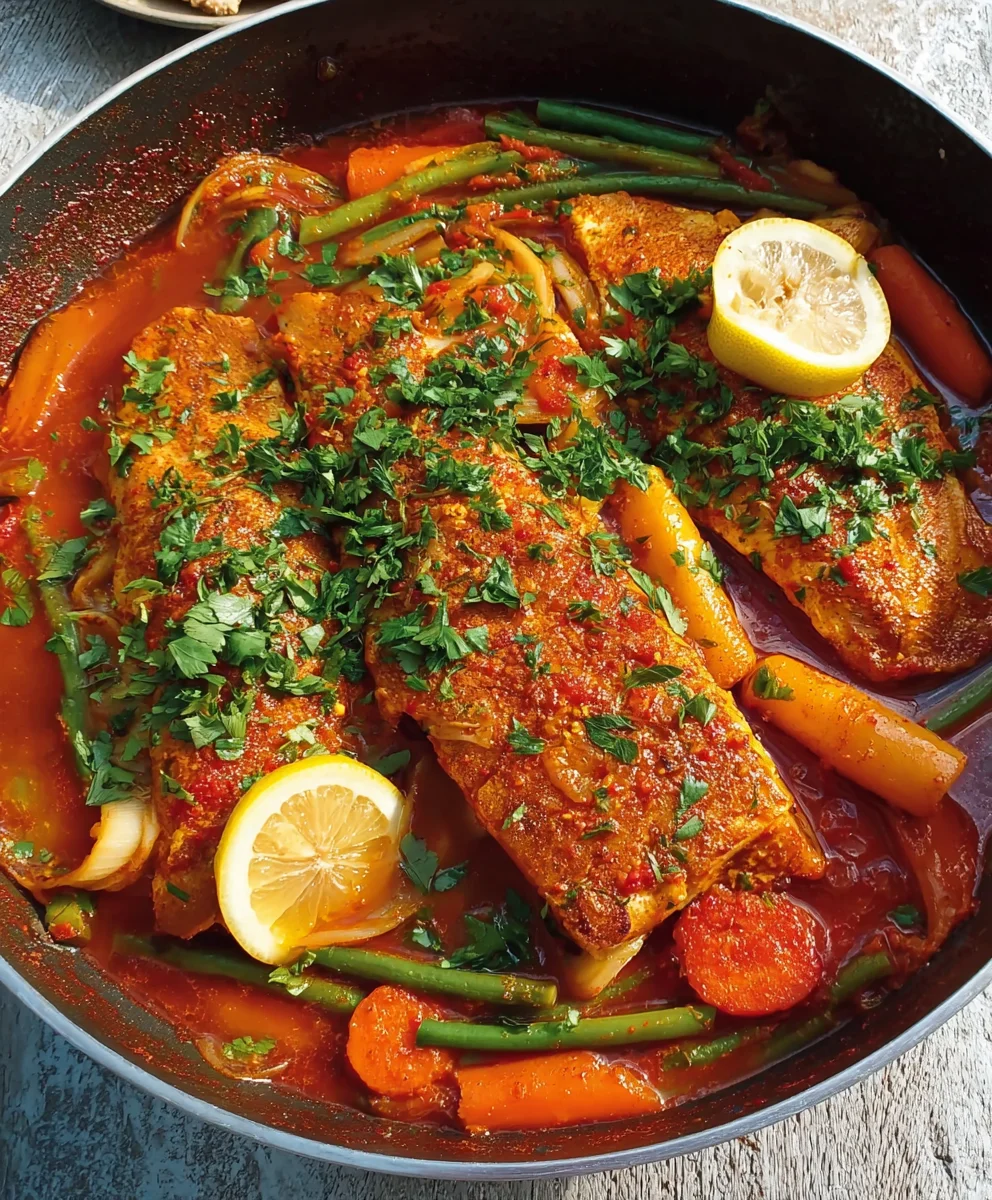
Conclusion:
We’ve reached the end of our culinary journey creating the Classic Spicy Moroccan Fish in Rich Sauce! I hope you’ve enjoyed learning how to bring this vibrant and flavorful dish to your table. This recipe is a testament to the incredible depth and warmth of Moroccan cuisine, offering a delightful balance of spice, herbs, and a luxuriously rich sauce that perfectly complements the flaky fish. Don’t be intimidated by the ingredients; the process is surprisingly straightforward and incredibly rewarding.
For serving, I highly recommend pairing your Classic Spicy Moroccan Fish in Rich Sauce with fluffy couscous to soak up all that delicious sauce. A side of fresh, crusty bread is also a fantastic choice. If you’re feeling adventurous with variations, consider adding a handful of olives or some chopped preserved lemon to the sauce for an extra layer of complexity. You can also experiment with different types of white fish, like cod or sea bass.
Most importantly, I encourage you to dive in and try this recipe for yourself. The aroma alone will transport you! Embrace the process, adjust the spice level to your preference, and savor every bite of this authentic Moroccan delight. Happy cooking!
Frequently Asked Questions:
Q: Can I make the sauce ahead of time for the Classic Spicy Moroccan Fish in Rich Sauce?
A: Absolutely! The sauce for the Classic Spicy Moroccan Fish in Rich Sauce can be made a day in advance. Store it in an airtight container in the refrigerator. Gently reheat it on the stovetop over low heat, adding a splash of water or broth if it becomes too thick, before adding your fish to finish cooking.
Q: What if I don’t like a lot of spice? Can I reduce the heat in the Classic Spicy Moroccan Fish in Rich Sauce?
A: Definitely! To make the Classic Spicy Moroccan Fish in Rich Sauce less spicy, simply reduce the amount of cayenne pepper or red pepper flakes used. You can omit them entirely if you prefer a very mild dish. The other aromatic spices like cumin, coriander, and paprika will still provide plenty of flavor.
Spicy Moroccan Fish in Flavorful Rich Sauce
A vibrant and flavorful Moroccan fish dish featuring tender salmon simmered in a rich, spicy sauce with aromatic vegetables.
Ingredients
-
1 pound (450g) salmon fillets, skin removed and cut into 2-inch chunks (or cod, halibut, or sea bass)
-
⅓ cup extra virgin olive oil
-
1 red bell pepper, seeded and sliced into ¼-inch thick strips
-
1 serrano pepper, seeded and thinly sliced (or 2 jalapeno peppers)
-
½ cup fresh cilantro, roughly chopped, divided
-
2 medium carrots, peeled and cut into ¼-inch thick matchsticks
-
1 large russet potato, peeled and cut into 1-inch cubes (optional)
-
6 large garlic cloves, peeled and halved
-
1 tablespoon tomato paste
-
¾ to 1 cup filtered water
-
1 tablespoon sweet paprika
-
½ tablespoon hot paprika
-
1 teaspoon coarse sea salt
-
½ teaspoon ground cumin
-
¼ teaspoon ground turmeric
Instructions
-
Step 1
Prepare all ingredients. Cut salmon into bite-sized chunks, pat dry, and season lightly. Heat 2 tablespoons olive oil in a large skillet over medium-high heat. Sear salmon for 1-2 minutes per side until lightly golden; remove and set aside. -
Step 2
Add remaining ⅓ cup olive oil to the same skillet over medium heat. Add red bell pepper, serrano pepper (or jalapenos), and carrots. Sauté for 5-7 minutes until slightly softened. Add garlic and optional potato cubes, cook for another 3-4 minutes until garlic is fragrant. Stir in tomato paste and cook for 1 minute more until fragrant and deepened in color. -
Step 3
Sprinkle sweet paprika, hot paprika, sea salt, cumin, and turmeric over vegetables. Stir well and cook for 1 minute to bloom spices. Pour in ¾ cup water, bring to a simmer, scraping up browned bits. Add more water if needed for desired sauce consistency. -
Step 4
Nestle seared salmon chunks back into the skillet among vegetables. Spoon sauce over fish. Reduce heat to low, cover, and simmer gently for 8-10 minutes, or until salmon is cooked through and flakes easily. Ensure potatoes are fork-tender if used. -
Step 5
Stir in half of the chopped cilantro. Taste and adjust seasoning if necessary. Spoon the fish and sauce into shallow bowls, distributing salmon, vegetables, and sauce evenly. Garnish with remaining cilantro.
Important Information
Nutrition Facts (Per Serving)
It is important to consider this information as approximate and not to use it as definitive health advice.
Allergy Information
Please check ingredients for potential allergens and consult a health professional if in doubt.