Easy Tanghulu Recipe – Sweet Candied Fruit Skewers
Tanghulu Recipe: Unlocking the Magic of Crystalized Fruit.
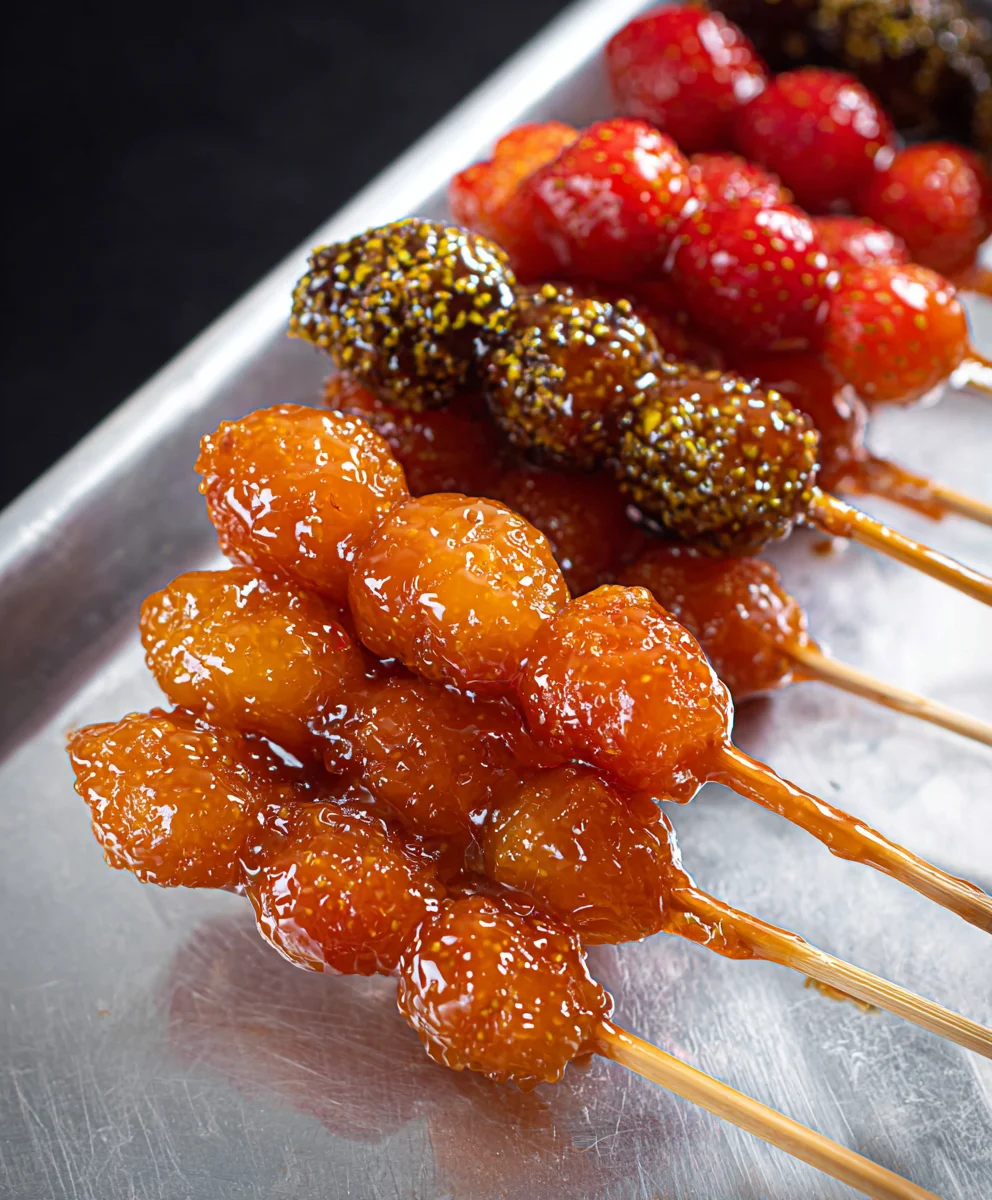
Discover the delightful world of Tanghulu! This iconic Chinese street food dessert is a visual and gustatory masterpiece, transforming simple fruit into glistening, edible jewels. If you’ve ever marveled at those impossibly shiny, sugar-coated skewers at markets or online, you’re in for a treat. This Tanghulu Recipe will guide you step-by-step to recreate that enchanting experience in your own kitchen. People adore Tanghulu for its satisfying crunch, its burst of fresh fruit flavor, and its undeniably whimsical appearance. It’s a dessert that sparks joy and nostalgia, perfect for sharing with family and friends or simply indulgin extractg in a moment of sweet escapism. What makes this Tanghulu Recipe truly special is its simplicity; with just a few basic ingredients, you can achieve professional-looking results. Prepare to be amazed as you master the art of the perfect sugar glaze and create your very own vibrant Tanghulu.
Ingredients:
- 3 cups granulated sugar
- 1 cup corn syrup
- 1 cup water
- 1 pound strawberries, washed and hulled
- 1 pound red grapes, washed and stemmed
- 1 pound cherry tomatoes, washed and stemmed
- 1 pound small plums, washed and pitted
- 1 pound small peaches, washed and pitted
- 1 pound small apricots, washed and pitted
- 1 pound firm apples, cored and cut into bite-sized pieces
- 1 pound firm pears, cored and cut into bite-sized pieces
- 1 pound kiwis, peeled and cut into bite-sized pieces
- 1 pound rambutan, peeled and pitted
- 1 pound lychees, peeled and pitted
- 1 pound physalis (ground cherries), husks removed
- 1 pound kumquats, washed and halved
- 1 pound star fruit, sliced thinly
- Food coloring (optional, for vibrant colors)
- Wooden skewers or popsicle sticks
- Parchment paper or silicone baking mats
Preparing Your Fruit
Before we dive into the magic of creating that signature crispy candy shell, it’s crucial to get your fruit ready. This step is all about ensuring the sugar syrup adheres beautifully to each piece. For fruits like strawberries, grapes, cherry tomatoes, plums, peaches, and apricots, you’ll want to ensure they are completely dry. Excess moisture is the enemy of a good tanghulu shell, as it can cause the sugar to crystallize unevenly or become sticky. Gently pat each piece with a paper towel. For larger fruits like apples and pears, cutting them into bite-sized pieces is essential. Aim for pieces that are roughly the same size to ensure they cook evenly in the syrup. For softer fruits like kiwis, rambutan, lychees, and physalis, ensure they are at a good ripeness – firm enough to hold their shape but not so soft that they will break apart. Kumquats can be left whole or halved depending on their size, and star fruit should be sliced thinly. Remember to remove any pits or cores as you go. For fruits that have a natural skin that might prevent sugar adhesion, like apples or pears, you can gently score the surface with a knife to create tiny nicks for the syrup to cling to. This might sound like a lot of prep, but it makes the coating process much smoother and the final product much more appealing. The key here is uniformity and dryness!
Cooking the Candy Syrup
Now for the heart of the Tanghulu recipe: the sugar syrup. This is where precision is important. You’ll need a medium-sized, heavy-bottomed saucepan to ensure even heat distribution, which helps prevent scorching. Combine the granulated sugar, corn syrup, and water in the saucepan. Stir these ingredients together over medium heat until the sugar has completely dissolved. Once the sugar is dissolved, stop stirring. Stirring after the sugar has dissolved can introduce air bubbles and lead to a cloudy or crystalline syrup. Continue to cook the mixture over medium-high heat without stirring. You’ll want to monitor the temperature closely with a candy thermometer. The target temperature for a perfect tanghulu shell is between 300°F and 310°F (150°C to 155°C), which is the hard crack stage. This stage is critical because it ensures the syrup will harden quickly and create that signature brittle shell. If you don’t have a candy thermometer, you can test the syrup by dropping a small amount into ice-cold water. It should form hard, brittle threads that snap easily. If you’re using food coloring, add a few drops once the syrup reaches around 250°F (120°C) and stir gently to incorporate the color. Be cautious as the syrup will splatter slightly when the color is added.
Mastering the Dip
This is the moment of truth! Have your prepared fruit pieces ready on their skewers and your parchment paper or silicone mats laid out on a clean surface. Working quickly is key here because the syrup hardens fast. Carefully dip each fruit-laden skewer into the hot sugar syrup. You want to swirl the fruit gently to coat it completely, ensuring a thin, even layer. Avoid over-dipping or letting the fruit sit in the syrup for too long, as this can result in a thick, heavy shell that might crack or become too hard to bite. Some people like to lift the skewer and rotate it to let any excess syrup drip back into the pan. This helps create that beautiful, smooth finish. If you find the syrup is hardening too quickly in the pan, you can gently return it to low heat for a brief moment to liquefy it again, but be very careful not to overheat it. Ensure every part of the fruit is covered; a few drips running down the skewer are perfectly fine and add to the rustic charm of homemade tanghulu. If you’re aiming for a more decorative look, you can even drizzle a little extra syrup over the coated fruit for a wispy effect.
Cooling and Hardening
Once each piece of fruit is perfectly coated, carefully place the skewers onto the prepared parchment paper or silicone baking mats. Allow them to cool and harden completely at room temperature. This process typically takes about 15 to 30 minutes, depending on the ambient temperature and humidity. Resist the urge to touch or move them while they are still hardening, as this can mar the shiny candy shell. You’ll know they are ready when the shell is completely solid and no longer sticky. If you live in a very humid environment, tanghulu can be a bit more challengin extractg to get perfectly crisp. In such cases, you might need to speed up the cooling process by placing them in the refrigerator for a few minutes after they’ve initially begun to set at room temperature, but be mindful that condensation can form and make them slightly less crisp over time. Once fully hardened, they are ready to be enjoyed!
Tips for Tanghulu Success
For the best tanghulu experience, several small details can make a big difference. Firstly, the choice of fruit is paramount. Firmer fruits hold up best to the heat and the coating process. Softer fruits can become mushy if they are dipped for too long or if the syrup is too hot. Secondly, ensure your workspace is organized beforgin extractou begin. Have your fruit skewered, your parchment paper ready, and your tools within easy reach, as the syrup-coating stage moves very quickly. If the syrup starts to crystallize, it can be difficult to salvage. This often happens if there are sugar crystals on the sides of the pan, so wipe down the sides with a wet pastry brush as the syrup heats up, if necessary. Another tip is to use wooden skewers that are long enough to handle the hot syrup safely and to skewer enough fruit pieces to create a nice surface area for coating. Don’t overcrowd the skewers; leave a little space between each fruit piece to ensure even coating. For a truly authentic look, you can dip the tips of the skewers in syrup before inserting them into the fruit to help them stick better. Finally, if you find yourself with leftover syrup that has hardened, you can gently reheat it to make it liquid again for future batches, but do so carefully to avoid burning it.
Conclusion:
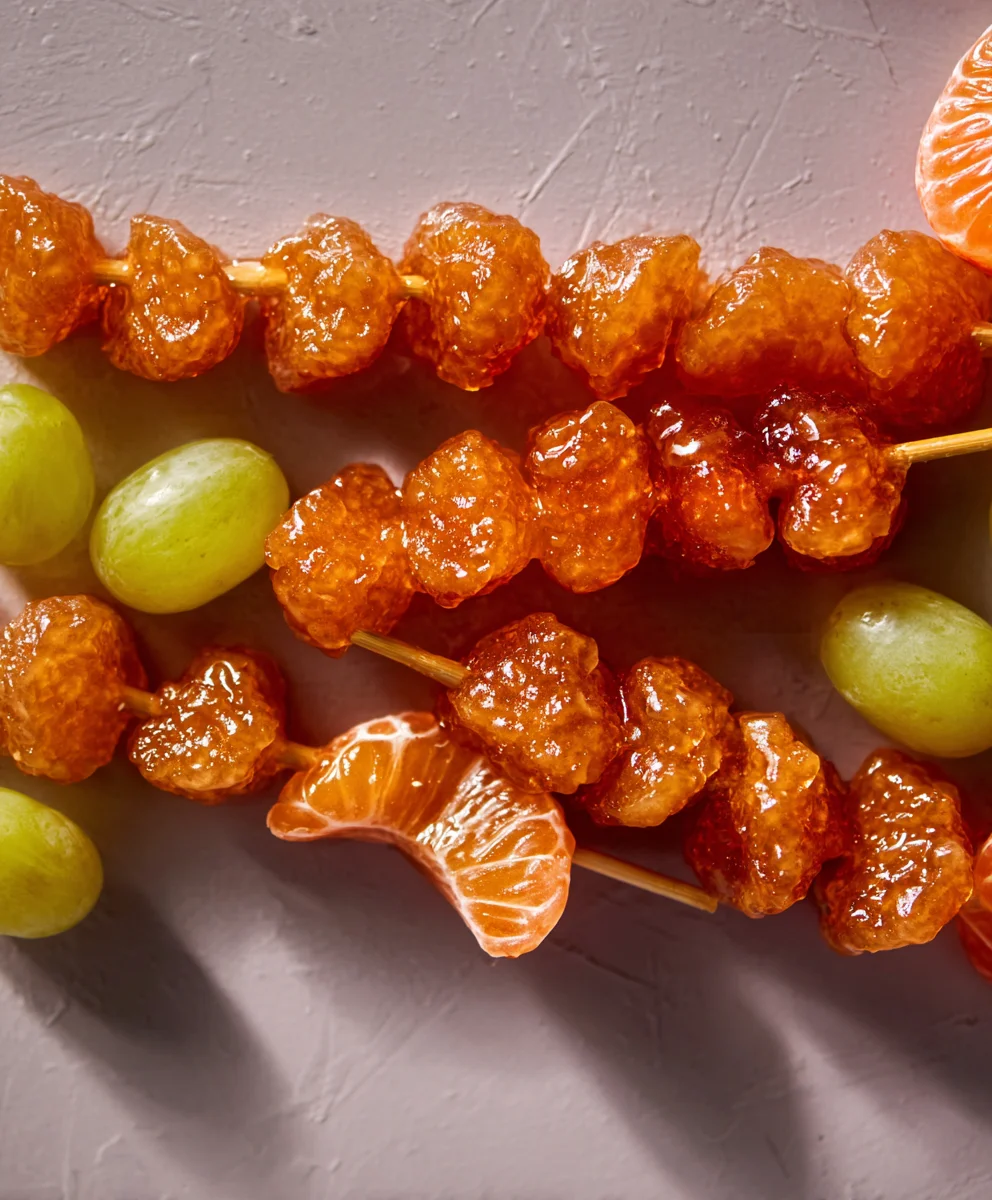
And there you have it! Your guide to creating the magical Tanghulu Recipe is complete. We’ve walked through each step, from preparing the fruit to achieving that perfect, shatteringly crisp sugar shell. The joy of Tanghulu lies not just in its stunning appearance but also in its delightful crunch and burst of fruity sweetness. Don’t be discouraged if your first attempt isn’t absolutely perfect; practice truly makes perfect with this recipe.
For serving suggestions, Tanghulu is fantastic as a standalone sweet treat, a unique dessert after a meal, or even as a fun activity for a party where guests can help skewer the fruit.
Regarding variations, feel free to experiment! While strawberries, grapes, and blueberries are classic, try kumquats, cherry tomatoes (for a sweet and savory twist!), or even small pieces of melon. You can also infuse your sugar syrup with a drop of food coloring for a vibrant visual effect.
I encourage you to gather your ingredients and give this delightful Tanghulu Recipe a try. It’s a rewarding and delicious project that’s sure to impress!
Frequently Asked Questions:
Why isn’t my sugar coating hardening?
Ensure your sugar syrup has reached the correct temperature (around 300°F or 150°C). This is crucial for crystallization. Also, make sure your fruit is completely dry before dipping. Any moisture will prevent the sugar from hardening properly. You can dip the fruit quickly into ice water after the sugar dip to help it set faster.
Can I make Tanghulu ahead of time?
Tanghulu is best enjoyed fresh, ideally within a few hours of making it. The sugar coating can become sticky and lose its crispness over time, especially in humid conditions. If you need to make it a bit in advance, store it in an airtight container in a cool, dry place. Refrigeration is generally not recommended as it can make the sugar sticky.
Easy Tanghulu Recipe – Sweet Candied Fruit Skewers
A simple recipe for making delicious candied fruit skewers (Tanghulu) with a crunchy, sweet sugar coating.
Ingredients
-
3 cups granulated sugar
-
1 cup corn syrup
-
1 cup water
-
1 pound strawberries, washed and hulled
-
1 pound red grapes, washed and stemmed
-
1 pound cherry tomatoes, washed and stemmed
-
1 pound small plums, washed and pitted
-
1 pound small peaches, washed and pitted
-
1 pound small apricots, washed and pitted
-
1 pound firm apples, cored and cut into bite-sized pieces
-
1 pound firm pears, cored and cut into bite-sized pieces
-
1 pound kiwis, peeled and cut into bite-sized pieces
-
1 pound rambutan, peeled and pitted
-
1 pound lychees, peeled and pitted
-
1 pound physalis (ground cherries), husks removed
-
1 pound kumquats, washed and halved
-
1 pound star fruit, sliced thinly
-
Food coloring (optional, for vibrant colors)
-
Wooden skewers or popsicle sticks
-
Parchment paper or silicone baking mats
Instructions
-
Step 1
Prepare your fruit: Ensure all fruits are washed, hulled/stemmed/pitted as needed, and completely dry. Cut larger fruits into bite-sized pieces of uniform size. For fruits with skins, gently score the surface to help sugar adhesion. -
Step 2
Cook the candy syrup: Combine sugar, corn syrup, and water in a heavy-bottomed saucepan. Heat over medium heat, stirring until sugar dissolves. Stop stirring and continue cooking over medium-high heat without stirring until the syrup reaches 300-310°F (150-155°C), the hard crack stage. If using food coloring, add it around 250°F (120°C). -
Step 3
Prepare for dipping: Have your fruit skewered and ready on parchment paper or silicone mats. Ensure your workspace is organized. -
Step 4
Dip the fruit: Working quickly, dip each skewered fruit into the hot syrup, swirling to coat evenly with a thin layer. Avoid over-dipping. Lift and rotate to let excess syrup drip back into the pan. If syrup hardens, gently reheat. -
Step 5
Cool and harden: Carefully place the coated skewers onto parchment paper or silicone mats. Let cool at room temperature for 15-30 minutes until the shell is completely solid and no longer sticky. Avoid touching while hardening.
Important Information
Nutrition Facts (Per Serving)
It is important to consider this information as approximate and not to use it as definitive health advice.
Allergy Information
Please check ingredients for potential allergens and consult a health professional if in doubt.