Japchae Korean Glass Noodle Stir Fry Recipe
Japchae (Korean Glass Noodle Stir Fry) is a dish that truly captures the heart and soul of Korean cuisine. It’s a vibrant, celebratory stir-fry that’s as beautiful to look at as it is delicious to eat. Have you ever encountered that delightful chegrape juicess of sweet potato glass noodles, glistening with a savory-sweet soy sauce, mingled with a colorful medley of crisp-tender vegetables and tender strips of protein? That, my friends, is the magic of Japchae. It’s the quintessential dish for Korean holidays, special gatherings, or simply when you crave a comforting yet exciting meal. What makes Japchae so universally beloved is its perfect balance of textures and flavors – a harmonious dance between the slightly sweet noodles, the earthy vegetables, and a hint of umami that keeps you coming back for more. It’s not just a stir-fry; it’s an experience, and I’m thrilled to share how you can recreate this iconic Japchae (Korean Glass Noodle Stir Fry) in your own kitchen.
Why You’ll Adore This Japchae Recipe
A Feast for the Senses
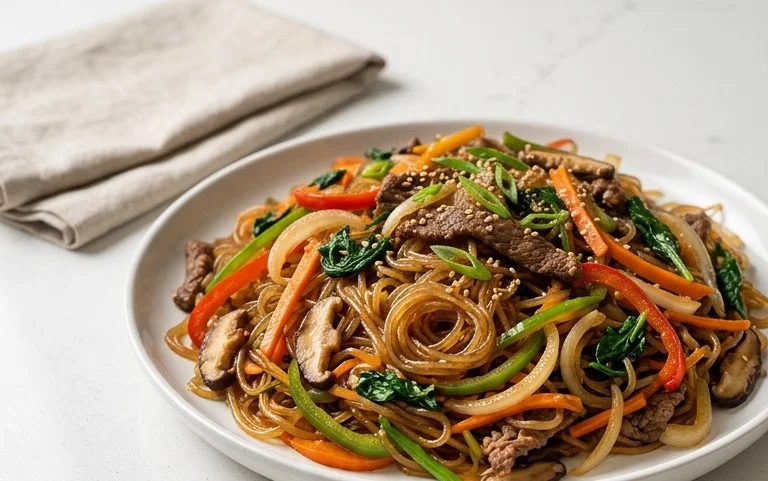
Japchae (Korean Glass Noodle Stir Fry)
Japchae is a beloved Korean dish that’s often served at celebrations and special occasions, but it’s also wonderfully satisfying for a weeknight meal. The star of this dish is the slippery, chewy sweet potato glass noodles, stir-fried with a colorful medley of vegetables and tender strips of beef, all coated in a savory and slightly sweet soy-sesame sauce. It’s a feast for the eyes and the palate, with a delightful balance of textures and flavors. Don’t be intimidated by the ingredient list; many of the vegetables are quick to prepare, and the overall process is quite manageable. Let’s get cooking!
Ingredients:
Preparing the Components
Before we start the stir-frying, it’s crucial to have all your ingredients prepped and ready to go. This dish comes together quickly once you start cooking, so having everything chopped and measured will make the process much smoother.
1. Noodle Preparation: Begin extract by preparing the sweet potato glass noodles. Bring a large pot of water to a rolling boil. Add the dried glass noodles and cook according to package instructions, usually around 6-8 minutes, until they are tender but still have a pleasant chew. They should be translucent. Drain the noodles thoroughly and rinse them under cold water to stop the cooking process and prevent them from sticking together. It’s a good idea to toss them with a little bit of cooking oil (about 1 teaspoon) at this stage to keep them separate. You can also snip them a few times with kitchen shears to make them easier to eat, about 2-3 cuts per strand.
2. Beef Marinade: While the noodles are cooking, prepare the beef. If you haven’t already, slice your chosen cut of beef into thin, bite-sized strips. In a medium bowl, combine the beef strips with 1 tablespoon of soy sauce, 1 teaspoon of sesame oil, a pinch of salt, and a good grind of black pepper. Let this marinate for at least 10-15 minutes while you prepare the vegetables. This will tenderize the beef and infuse it with flavor.
3. Vegetable Preparation: Prepare all your vegetables. Julienne the peeled carrot. Thinly slice the yellow onion. Slice your mushrooms thinly. Wash and destem the baby spinach. Cut the green onions into roughly 1-inch pieces. Having everything prepped in separate bowls makes for an organized stir-fry.
4. Sauce Combination: In a small bowl, whisk together the soy sauce, honey (or brown sugar), and brown sugar. This is the base of your japchae sauce, providing that signature sweet and savory depth.
5. Egg Preparation: In another small bowl, beat the two large eggs. You’ll be cooking these into thin omelets and then slicing them to use as a colorful garnish.
Cooking the Japchae
Now that all our components are ready, it’s time to bring it all together. We’ll cook each element separately to ensure everything is perfectly cooked before combining them.
1. Cooking the Egg Omelets: Heat a teaspoon of oil in a non-stick skillet over medium heat. Pour in half of the beaten egg mixture and swirl to create a thin omelet. Cook until set, then flip and cook briefly on the other side. Remove from the skillet and let it cool slightly. Repeat with the remaining egg mixture. Once cooled, roll up the omelets and slice them into thin strips. Set aside.
2. Stir-Frying the Aromatics and Vegetables: Add about 1 tablespoon of oil to a large skillet or wok over medium-high heat. Add the thinly sliced yellow onion and stir-fry for 2-3 minutes until softened and slightly translucent. Add the julienned carrots and sliced mushrooms and continue to stir-fry for another 3-4 minutes, until the carrots are tender-crisp and the mushrooms have released some of their moisture and started to brown. Season lightly with salt and pepper. Remove the vegetables from the skillet and set aside with the cooked egg.
3. Cooking the Beef: Add another tablespoon of oil to the same skillet over medium-high heat. Add the marinated beef strips in a single layer (cook in batches if necessary to avoid overcrowding, which will steam rather than sear the beef). Stir-fry until the beef is browned and cooked through, about 3-5 minutes. Remove the cooked beef from the skillet and set aside with the vegetables.
4. Wilting the Spinach and Cooking the Noodles: Add the baby spinach to the hot skillet with a tiny splash of water if needed. Stir-fry for just about 1 minute, or until wilted. Remove the spinach and set aside. Now, add the cooked and drained glass noodles to the skillet. Pour the prepared sauce mixture over the noodles. Toss well to coat the noodles evenly. Cook for about 2-3 minutes, allowing the noodles to absorb the sauce and become glossy.
5. Combining and Finishing: Add the cooked beef, stir-fried vegetables (onion, carrot, mushrooms), and wilted spinach back into the skillet with the noodles. Add the green onion pieces. Toss everything together gently, ensuring all ingredients are well combined and heated through. Continue to cook for another 1-2 minutes, stirring constantly, until everything is hot. Taste and adjust seasoning with salt, pepper, or a little more soy sauce if needed. Finally, drizzle in the toasted sesame oil and toss one last time.
Serve the japchae immediately, garnished with toasted sesame seeds if desired. This dish is delicious served on its own or as part of a larger Korean meal. Enjoy the vibrant colors and comforting flavors of your homemade Japchae!
Conclusion:
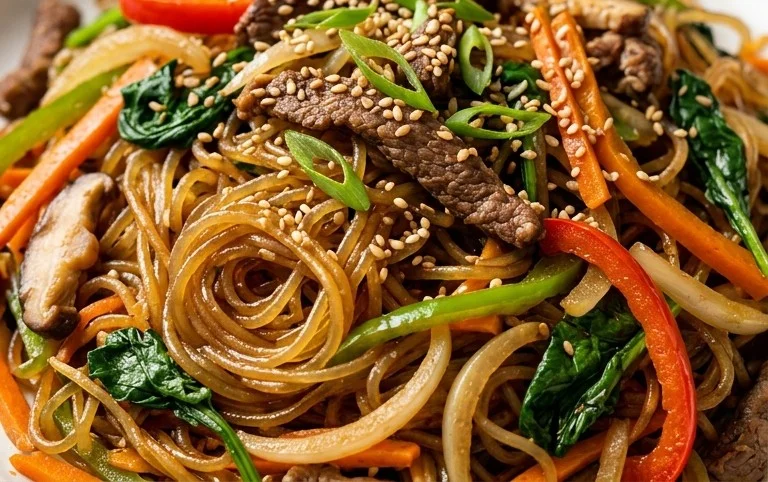
And there you have it – a delicious and vibrant Japchae, ready to impress! This Korean glass noodle stir fry is a fantastic dish because of its delightful chewy texture from the sweet potato noodles, the satisfying mix of colorful vegetables, and the perfectly balanced savory-sweet glaze. It’s a meal that feels both comforting and celebratory, perfect for weeknight dinners or special gatherings. I truly encourage you to give this Japchae recipe a try; it’s incredibly rewarding to create and even more enjoyable to share.
For serving, Japchae shines on its own as a hearty vegetarian or vegan main course. However, it also makes a wonderful side dish alongside grilled meats like Korean BBQ bulgogi, or even alongside fried chicken. Don’t be afraid to get creative with variations! You can easily add thinly sliced beef, beef, or chicken for a meatier version. Feel free to swap out vegetables based on what you have on hand – mushrooms, snap peas, or even broccoli florets would be delicious additions. The key is to have fun and make it your own!
Frequently Asked Questions about Japchae:
What are Korean glass noodles?
The characteristic “glass noodles” in Japchae are made from sweet potato starch. They have a unique chewy and translucent appearance when cooked, and they absorb the flavors of the sauce beautifully. They are often referred to as dangmyeon.
Can I make Japchae ahead of time?
You can prepare most components of Japchae ahead of time. The vegetables can be prepped and even stir-fried separately a day in advance. The noodles can also be cooked. However, for the best texture, it’s ideal to combine everything and toss with the sauce just before serving. If you do need to reheat, do so gently, as the noodles can become mushy if overcooked or reheated too aggressively.
What makes Japchae “sweet potato noodles”?
The name comes from the primary ingredient used to create the noodles, which is sweet potato starch. This starch gives the noodles their distinctive texture and translucent quality, setting them apart from other types of noodles.
Japchae (Korean Glass Noodle Stir Fry)
A savory and slightly sweet Korean glass noodle stir-fry with tender beef, colorful vegetables, and a rich sesame oil dressing.
Ingredients
-
12 ounces sweet potato glass noodles
-
16 ounces beef (cut into strips)
-
2 large eggs (beaten)
-
1 large carrot (peeled and julienned)
-
1 medium yellow onion (thinly sliced)
-
3 mushrooms (thinly sliced)
-
2 cups baby spinach (packed)
-
2 stalks green onion (cut into 1 inch pieces)
-
oil (for cooking)
-
toasted sesame seeds (optional for garnish)
-
salt and black pepper (as needed)
-
7 tablespoons soy sauce (light sodium)
-
3 tablespoons honey
-
2 tablespoons brown sugar
-
2 tablespoons toasted sesame oil
Instructions
-
Step 1
Cook glass noodles according to package directions. Drain, rinse with cold water, and cut into shorter lengths. Set aside. -
Step 2
In a bowl, mix soy sauce, honey, brown sugar, and black pepper for the sauce. Set aside. -
Step 3
Season beef strips with salt and pepper. Heat oil in a large skillet or wok over medium-high heat. Stir-fry beef until browned. Remove beef from skillet and set aside. -
Step 4
Add a little more oil to the skillet if needed. Stir-fry onions and mushrooms until softened. Add julienned carrots and stir-fry for another 2-3 minutes until tender-crisp. -
Step 5
Add spinach to the skillet and stir-fry until wilted. Return cooked beef to the skillet. Add the cooked glass noodles and pour the prepared sauce over everything. -
Step 6
Toss all ingredients to combine and coat evenly with the sauce. Stir-fry for an additional 2-3 minutes until heated through. Stir in green onions and toasted sesame oil. Garnish with toasted sesame seeds if desired.
Important Information
Nutrition Facts (Per Serving)
It is important to consider this information as approximate and not to use it as definitive health advice.
Allergy Information
Please check ingredients for potential allergens and consult a health professional if in doubt.